fabricante profissional, desde 2009.
espalhando o perfume do amor por todo o mundo.


português
Categorias
Novo blog
Como escolher o difusor de aroma certo para o seu espaço comercial: um guia de compra completo August 27 , 2026
Escolher um difusor de aromas comercial não é simplesmente uma questão de encontrar o modelo com a maior cobertura publicada.
O saguão de um hotel, uma boutique de moda, a recepção de um escritório, uma academia, um showroom e um shopping center podem ter áreas semelhantes, mas alturas de teto, padrões de fluxo de ar, horários de funcionamento, limites de ruído e regras de instalação completamente diferentes.
O equipamento de aromatização ideal deve ser adequado tanto ao edifício quanto à estratégia de fragrâncias.
Este guia oferece a operadores de hotéis, varejistas, administradores de propriedades, distribuidores e equipes de compras um processo prático para selecionar um difusor de aromas comercial sem superdimensionar o equipamento ou negligenciar os custos operacionais.
Escolha um difusor de aromas comercial somente após confirmar seis critérios:
A área ou zona exata que deve ser perfumada.
O volume cúbico dessa zona
Como o ar entra, circula e sai do espaço
Se a instalação deve ser independente, montada na parede ou conectada ao sistema de climatização.
O cronograma operacional necessário, o nível de ruído e o método de controle.
O consumo previsto de óleo de fragrância, a carga de trabalho de manutenção e o custo total.
A cobertura publicada é útil para criar uma lista restrita. Não substitui uma visita técnica ou um comissionamento no local.
Comece pensando no objetivo do projeto, e não na máquina.
Objetivos diferentes podem exigir planos de aromatização diferentes:
Um hotel pode querer causar uma impressão consistente logo na chegada, no saguão principal.
Um varejista pode desejar uma atmosfera de marca reconhecível perto da entrada e do salão de vendas.
Um escritório pode desejar uma experiência de recepção discreta, sem afetar as áreas de trabalho individuais.
Um showroom de imóveis pode precisar de fragrância durante as apresentações, mas não durante a noite.
Um spa pode precisar de funcionamento silencioso e de menor intensidade perto das salas de tratamento.
Uma empresa com várias filiais pode priorizar configurações padronizadas e procedimentos simples para a equipe.
Escreva uma frase definindo o resultado pretendido. Por exemplo:
Criar uma fragrância sutil e consistente em toda a área de recepção e espera de 600 m³ durante o horário de funcionamento, sem que o aroma se espalhe para as salas de reunião adjacentes.
Isso é mais útil do que pedir por "uma máquina de aromas potente".
A escolha de um difusor comercial deve começar pela avaliação do volume do ambiente:
Volume do espaço = comprimento × largura × altura média do teto
Por exemplo, uma loja com dimensões de 20 metros por 10 metros e pé-direito de 4,5 metros tem um volume aberto aproximado de:
20 × 10 × 4,5 = 900 m³
Dois espaços com a mesma área de 200 m² podem exigir equipamentos diferentes se um tiver um pé-direito de 3 metros e o outro um átrio de 7 metros.
Registre mais do que o número principal. Inclua:
Áreas abertas e fechadas
Mezaninos e átrios
Escadas que ligam outros andares
provadores ou quartos privativos
Portas externas frequentemente abertas
Áreas separadas por paredes de altura total.
Espaços que devem permanecer sem perfume
Não some automaticamente todos os cômodos a um único total. Um escritório fechado e um saguão aberto podem precisar de controle de inadimplência separado, mesmo que façam parte da mesma propriedade.
A fragrância segue o movimento do ar. Uma planta baixa, por si só, não consegue mostrar como ela se propagará.
Durante a vistoria do local, identifique:
Grelhas de entrada e retorno de ar do sistema HVAC
Programação de entrada de ar fresco
Ventiladores de exaustão
Portas giratórias, deslizantes ou permanentemente abertas
Escadas rolantes, halls de elevadores e escadarias
Entradas com grande fluxo de pessoas
Grandes ventiladores ou cortinas de ar
Divisórias e prateleiras altas
Limites de serviço de alimentação ou cozinha
Cargos da equipe e assentos de longa permanência
O mais recentePadrão ANSI/ASHRAE 62.1-2025Abrange ventilação, filtragem, controles, operação predial e manutenção para uma qualidade aceitável do ar interior. Sua edição de 2025 inclui requisitos atualizados para ventilação com controle de demanda, o que é relevante porque o fluxo de ar pode variar de acordo com a ocupação e a programação do sistema.
Um difusor de aromas deve funcionar em harmonia com o fluxo de ar do edifício, mas não fornece ar fresco, não remove poluentes nem substitui a ventilação.Diretrizes atuais da EPA (Agência de Proteção Ambiental dos EUA) sobre a qualidade do ar em ambientes internosIdentifica o controle na fonte, a ventilação e a filtragem ou purificação do ar como estratégias essenciais para a qualidade do ar interior.
Se um espaço apresentar problemas de fumaça, umidade, mofo, drenagem, restos de comida ou ventilação, investigue primeiro a origem. Fragrâncias não devem ser usadas para mascarar problemas não resolvidos no edifício.
Os principais formatos são sistemas autônomos, sistemas de parede e sistemas conectados ao sistema de climatização (HVAC).
As máquinas independentes ficam no chão, em uma prateleira ou sobre uma superfície estável de um móvel. Geralmente, são o formato mais rápido para instalar e realocar.
Eles são úteis quando:
O local precisa de um teste piloto.
O acesso ao duto não está disponível.
A zona alvo requer controle independente.
O inquilino não pode modificar o edifício.
A planta baixa muda regularmente.
O equipamento pode ser posicionado com segurança.
As limitações são a visibilidade, o ruído local, a gestão dos cabos elétricos e a possibilidade de a fragrância se concentrar perto da unidade.
Equipamentos montados na parede podem manter balcões e pisos livres. Podem ser adequados para escritórios, corredores, banheiros, pequenas áreas de comércio e recepções, desde que haja uma posição adequada na parede e uma tomada elétrica disponível.
Verifique se o equipamento não ficará bloqueado por móveis, cortinas, mercadorias, portas ou filas de clientes. Ele também deve permanecer acessível para troca de óleo e manutenção.
An HVAC scent diffuser introduces fragrance into compatible building airflow for broader distribution.
This can suit large permanent spaces when:
The intended area matches a controllable HVAC zone
Equipment should remain outside the customer area
The duct route and injection position are suitable
Facility staff can provide service access
The building owner and engineering team approve the installation
Do not connect tubing to an arbitrary supply or return duct. A qualified building or HVAC professional should review airflow direction, pressure, shared zones, filtration, operating hours, and the risk of fragrance reaching unintended areas.
Coverage should be only one line in the comparison.
Commercial equipment should allow the operator to reduce or increase output through controlled work and pause periods. The available range should be suitable for the smallest intended setting, not only maximum output.
Check whether the machine supports daily time periods, different days of the week, automatic restart, and an easy method for returning to approved settings.
Noise matters in spas, meeting areas, quiet retail environments, VIP lounges, and reception desks. Ask how the published noise figure was measured and assess the sample in the actual placement position.
A larger bottle can reduce refill frequency, but it also increases the amount of oil stored in the device. Select capacity using operating hours, tested consumption, access frequency, and staff responsibility.
Possible options include buttons, touch controls, Bluetooth, Wi-Fi, or an App. More connectivity is useful only if the customer can support account management, permissions, updates, network access, and staff training.
Public-facing equipment may need a lock, hidden controls, secure oil access, or placement outside customer reach.
Confirm how staff reach the oil bottle, atomizer, tubing, seals, filter, and power connection. A concealed installation still needs convenient service access.
The following framework helps narrow the format before comparing individual models.
| Commercial Space | Main Buying Priority | Typical Starting Format |
|---|---|---|
| Large hotel lobby | Broad coverage, quiet operation, premium appearance | Floor-standing or reviewed HVAC solution |
| Fashion or lifestyle retail | Local control, flexible placement, brand presentation | Standalone commercial diffuser |
| Office reception | Subtle output, low noise, simple maintenance | Compact standalone or wall-mounted diffuser |
| Showroom or sales center | Scheduling, visible design, changing occupancy | Floor-standing diffuser |
| Spa or wellness reception | Quiet operation, low minimum output | Compact or wall-mounted diffuser |
| Large multi-zone property | Independent zones and centralized distribution | Multiple standalone units or engineered HVAC plan |
These are starting points, not automatic prescriptions.
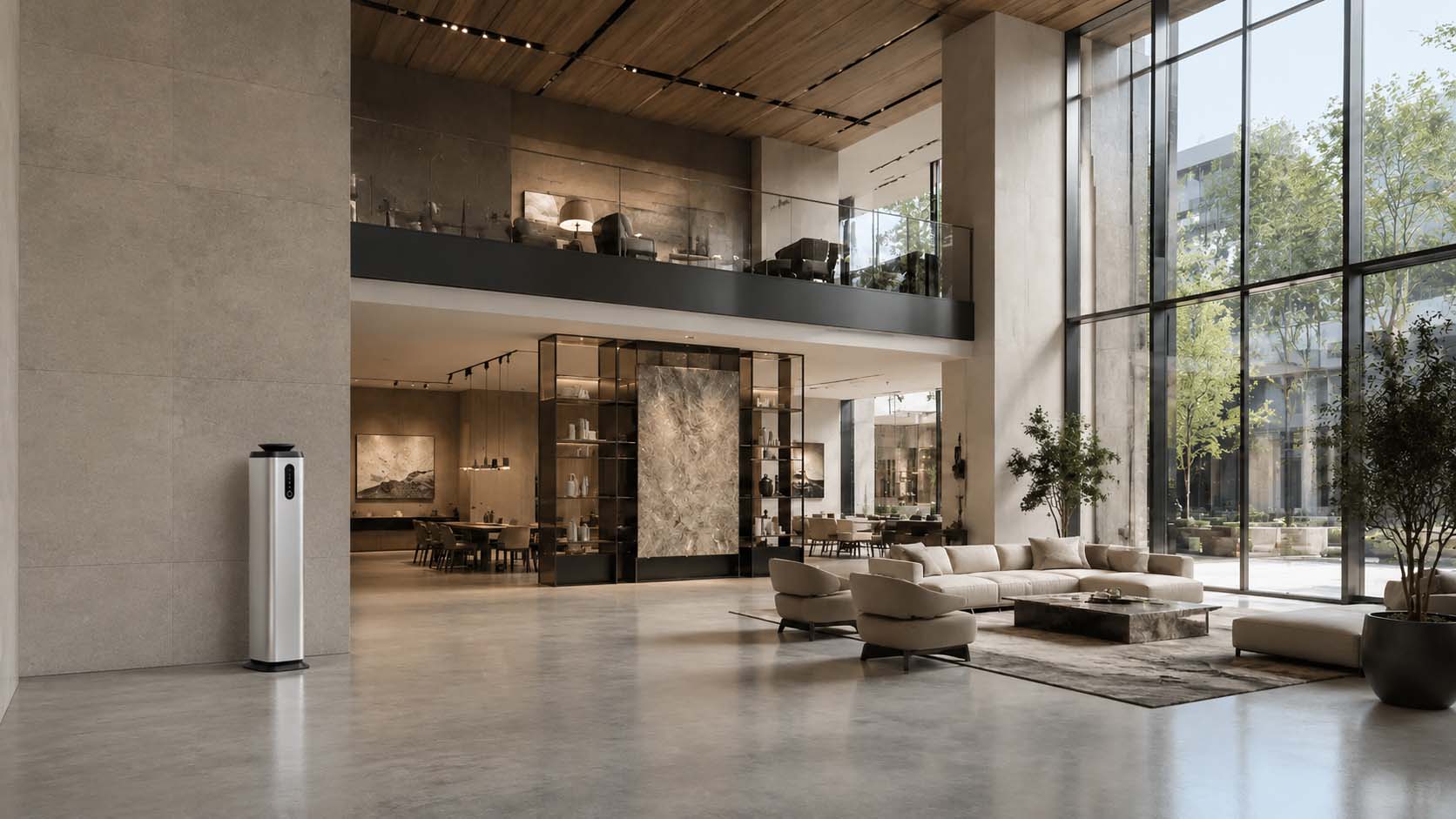
TheDANQ M63 floor-standing scent diffuseris designed for large commercial areas. Current company materials publish a 1,000 ml bottle, standalone installation, low-noise operation, and coverage up to 4,000 m³.
That published figure should be used to shortlist the model, not to guarantee performance in every 4,000 m³ property. A high-ceiling lobby with open doors and strong fresh-air supply may perform differently from an enclosed showroom of the same volume.
The Q1000PRO is part of DANQ’s commercial scent equipment range and can be considered for retail, hospitality, office, and other project environments.
Because final selection depends on the current model configuration, request the latest Q1000PRO specification sheet, installation options, oil capacity, control functions, noise conditions, consumption estimate, and model-specific documents before purchase.
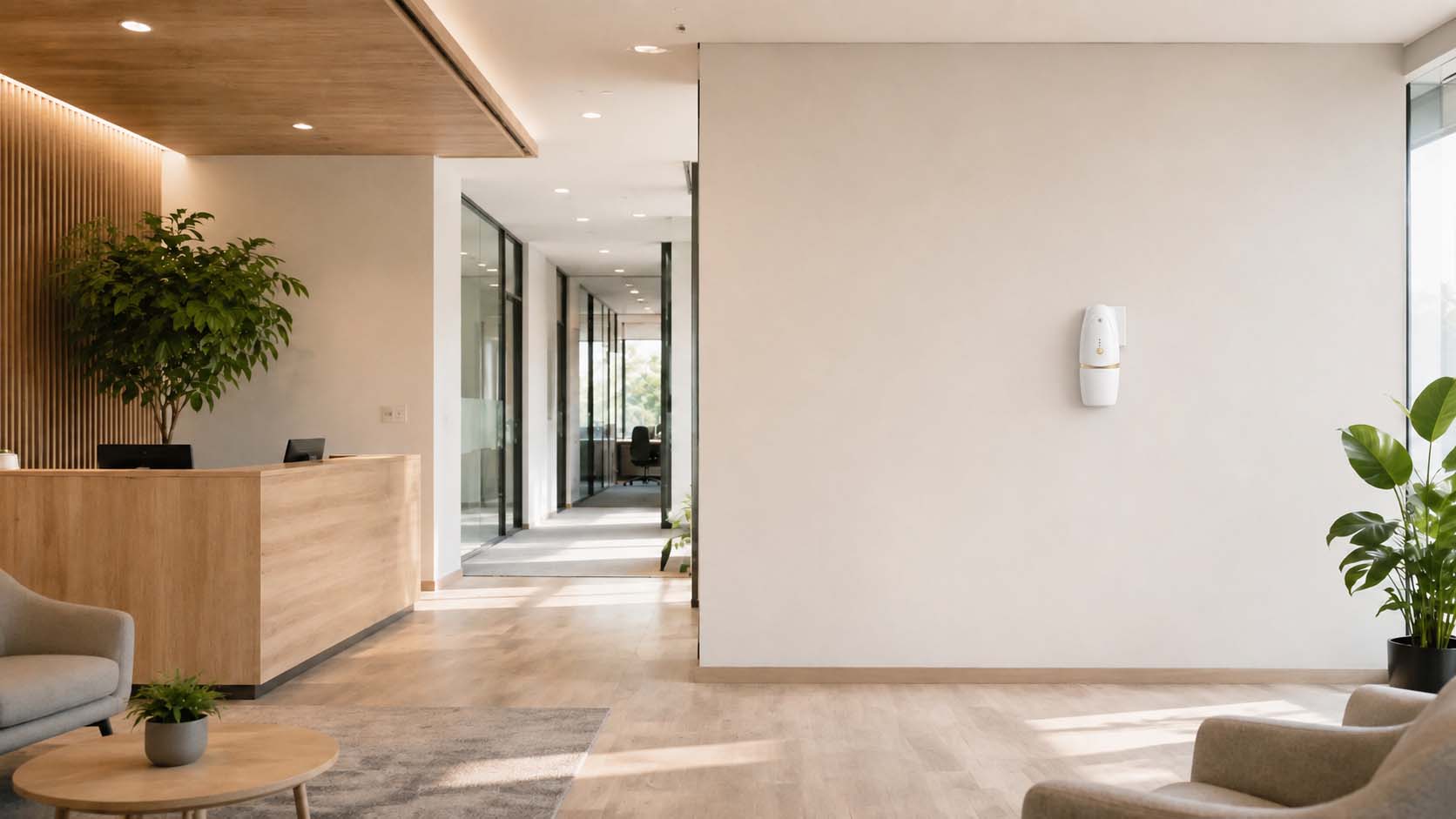
The S915 is a wall-mounted plug-in model designed to keep floor and counter space clear. DANQ product materials describe waterless operation, Bluetooth control, and quiet performance.
Confirm the plug standard, mounting orientation, coverage requirement, lowest output, oil capacity, and service access for the destination market and intended location.
Unit price does not show the full cost of a commercial scent program.
Compare:
Equipment price
Installation or electrical work
Fragrance-oil consumption
Oil price and shipping classification
Refill and cleaning labor
Atomizer cores, seals, tubing, and other wear parts
App or remote-management requirements
Staff training
Replacement equipment or downtime allowance
Freight, duties, and local taxes
A basic operating estimate can use:
Monthly oil cost = tested hourly consumption × daily operating hours × operating days × oil price
Do not use maximum-output consumption if the approved program runs at a much lower duty cycle. Test with the selected fragrance because viscosity and volatility can affect atomization and consumption.
Also compare labor. A lower-priced device that needs frequent local attention may cost more across 30 or 100 locations than equipment with a longer, predictable refill cycle.
The machine, oil, and settings operate as one system.
Before approving bulk oil or equipment, verify:
Atomization stability
Fragrance character after diffusion
Residue around the outlet
Compatibility with tubing, seals, and the atomizer
Consumption under the proposed schedule
Performance after extended operation
Required cleaning interval
A fragrance that smells balanced on a blotter may change after diffusion. Highly volatile notes may dominate first, while heavier materials can affect persistence and maintenance.
Request the current Safety Data Sheet and other documents required for the exact oil, application, and destination market. Do not assume that one fragrance document covers every formula or that every oil is compatible with every diffuser.
Start below the expected final setting and increase gradually.
A useful pilot should include:
Installation during normal building operation
An agreed starting work and pause cycle
Checks at the entrance, center, boundaries, and staff positions
Review during quiet and busy periods
Oil-level and maintenance records
Customer and staff feedback
A documented final setting
Use a simple intensity scale such as:
Absent
Subtle
Noticeable
Strong
Uncomfortable
Ask new arrivals as well as employees. Staff may become less aware of the fragrance after extended exposure.
If the scent reaches restaurants, treatment rooms, neighboring tenants, private offices, or other unintended areas, adjust placement, output, zoning, or operating periods before adding more equipment.
Provide enough information for a project-specific recommendation.
Your RFQ should include:
Country and destination market
Type of commercial property
Floor plan and photographs
Length, width, and ceiling height
Target scenting zones
Areas that must remain unscented
HVAC information and operating schedule
Door and traffic conditions
Required installation format
Daily business hours
Noise expectations
Preferred control method
Fragrance direction
Estimated number of locations
Sample requirements
OEM/ODM requirements
Required model-specific documents
Avoid asking only, “Which machine covers 1,000 square meters?” The supplier needs volume, airflow, zoning, and operating information to make a useful recommendation.
Before approving the purchase order, confirm:
Approved model and hardware revision
Installation method and placement drawing
Voltage, adapter, and plug standard
Oil bottle and atomizer configuration
Fragrance code and approved sample
Initial operating schedule
Cleaning and refill procedure
Spare-parts list
Warranty and after-sales process
Packaging and accessories
Logo, color, or App customization
Current model-specific compliance documents
Pre-shipment inspection criteria
Change-control process
Certification claims should always be verified by exact model and destination. A document for another SKU or an earlier hardware version may not apply to the equipment being ordered.
Calculate the cubic volume using length × width × average ceiling height. Then evaluate airflow, doors, HVAC schedules, zoning, and fragrance intensity before choosing the final model.
No. An oversized machine may create an uncomfortable hot spot, short work cycles, higher cost, or unnecessary noise. The lowest controllable output is important in smaller or quiet spaces.
Choose standalone equipment for flexible placement, pilots, and independent local control. Consider HVAC integration for large permanent zones only after the building system and shared airflow have been reviewed.
A fragrance system is not a substitute for source control, cleaning, ventilation, filtration, moisture correction, or building maintenance. Resolve the source of persistent odors first.
The interval depends on the model, oil, schedule, environment, and operating hours. Follow the model-specific instructions and record refills, cleaning, consumption, and component replacement.
Send the property type, dimensions, ceiling height, HVAC information, doors, business hours, installation restrictions, fragrance direction, destination market, and expected quantity.
The best commercial scent diffuser is not automatically the machine with the highest output. It is the system that delivers controllable fragrance across the intended zone while remaining practical to install, operate, refill, clean, and support.
Measure cubic volume, map airflow, compare installation formats, calculate operating cost, and test the selected machine with the selected fragrance in the real property.
A DANQ fabrica equipamentos de difusão de aromas desde 2009 e oferece suporte a projetos comerciais, de climatização (HVAC), residenciais, automotivos, de óleos essenciais e OEM/ODM. Os compradores podem solicitar recomendações de modelos, catálogos de produtos, orçamentos, amostras de equipamentos e amostras de fragrâncias.
Entre em contato com a DANQ Aroma para obter recomendações sobre difusores de aromas comerciais.

fabricante profissional, desde 2009.
espalhando o perfume do amor por todo o mundo.


Guangzhou DANQ Environmental Technology Co.,LTD